


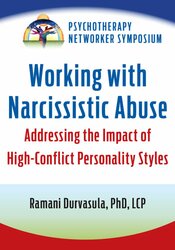
Working with Narcissistic Abuse: Addressing the Impact of High-Conflict Personality Styles
- Average Rating:
- 43
- Speaker:
- Ramani Durvasula, PhD, LCP
- Duration:
- 2 Hours 01 Minutes
- Copyright:
-
11 Mar, 2022
- Product Code:
- NOS096202
- Media Type:
- Digital Seminar
- Access:
- Never expires.

Description
Narcissism is a ubiquitous term these days, but when it shows up in therapy—even indirectly—most clinicians aren’t sure how to approach it. The dearth of training on high-conflict personality styles, coupled with a reticence to “label” people who are close to the client but not in the room, has meant that many clients suffering from narcissistic abuse in familial, intimate, or workplace relationships don’t get the help they need. This session will offer the most up-to-date research on antagonistic personality styles, and provide a practical roadmap for working with clients with patterns of narcissistic abuse. You’ll discover:
- How to identify the characteristics of narcissistic abuse that are often misdiagnosed
- A holistic treatment approach that can be applied trans-theoretically
- An actionable framework for educating clients about narcissism
CPD
Speaker
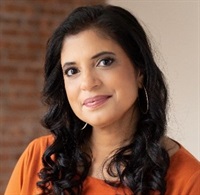
Ramani Durvasula, PhD, LCP Related seminars and products
Ramani Durvasula, PhD is a psychologist and the founder of LUNA Education, Training and Consulting, LLC. She’s professor emerita of psychology at California State University Los Angeles and the author of multiple books, including Don’t You Know Who I Am: How to Stay Sane in the Era of Narcissism, Entitlement and Incivility and Should I Stay or Should I Go: Surviving a Relationship With a Narcissist.
Speaker Disclosures:
Financial: Ramani Durvasula is the founder and CEO of LUNA Education, Training, and Consulting and has an employment relationship with the University of Johannesburg. Ramani Durvasula receives royalties as a published author. She receives a speaking honorarium and recording royalties from Psychotherapy Networker and PESI, Inc. She has no relevant financial relationships with ineligible organizations.
Non-financial: Ramani Durvasula is an associate editor for Behavioral Medicine. She is a member of the American Psychological Association, the Association for Psychological Science Society for Behavioral Medicine, and the International Association of Applied Psychology.
Objectives
- Outline a holistic view of the dynamics of narcissism and narcissistic personality disorder, and “narcissism-adjacent” personality styles, using a framework that captures the range of antagonistic personality styles.
- Outline a clinical understanding of the phenomenon of narcissistic abuse, the manner in which it is manifested, the impact on individuals, and the overlapping patterns that affect clients.
- Develop an actionable framework and treatment plan for working with clients experiencing narcissistic abuse for use in clinical practice.
- Analyze specific challenges in working with individuals with antagonistic personality styles and/or those who are experiencing narcissistic-adjacent relational stress.
- Categorize the dynamics of narcissistic and other narcissistic-adjacent relationships.
Outline
- Formulate a holistic view of the dynamics of narcissism and narcissistic personality disorder, and “narcissism-adjacent” personality styles, using a framework that captures the range of antagonistic personality styles.
- Review the diagnosis of NPD
- Broaden the understanding using a combination of the alternative model for personality disorders from the DSM-5, a discussion of personality dynamics that overlap with narcissism
- Review of co-occurring diagnostic patterns
- Formulate a clinical understanding of the phenomenon of narcissistic abuse, the manner in which it is manifested, the impact on individuals, and the overlapping patterns that affect clients
- Define what is meant by narcissistic abuse and the putative behavioral, cognitive and emotional patterns associated with this pattern
- Discussion of other patterns from which NA needs to be distinguished
- Risk factors for narcissistic abuse
- Provide an actionable framework for working with clients experiencing narcissistic abuse
- Review of a systematic plan that is designed to assess for and address narcissistic abuse
- Discussion of how to integrate this psychoeducational and treatment approach into existing theoretical frameworks
- Review adjunctive and consultative considerations when working with clients experiencing NA
- Review risks and limitations
Target Audience
- Psychologists
- Physicians
- Addiction Counselors
- Counselors
- Social Workers
- Marriage & Family Therapists
- Art Therapists
- Nurses
- Other Behavioral Health Professionals
Reviews
| 5 |
|
| 4 |
|
| 3 |
|
| 2 |
|
| 1 |
|
Overall: 4.8
Total Reviews: 43
Satisfaction Guarantee
Your satisfaction is our goal and our guarantee. Concerns should be addressed to info@pesi.co.uk or call 01235847393.
Please wait ...