


The New Neuroscience of Attachment
Cutting-Edge Neuroscience-Informed Interventions for Working With Attachment Styles
- Average Rating:
- 9
- Speaker:
- Ana Lund, MBACP PhD(S)
- Duration:
- 5 Hours 59 Minutes
- Format:
- Audio and Video
- Copyright:
-
26 Jun, 2025
- Product Code:
- PDR031687
- Media Type:
- Digital Seminar
- Access:
- Never expires.

Description
Attachment is our primary social survival strategy, and as such a hard-wired biological mechanism. In the therapy room, attachment strategies surface repeatedly, whether as the main presentation or as factors that compound other presenting problems, often creating significant obstacles to therapeutic change.
Attachment theory has shed light on how we relate to others through our attachment patterns, but what about the underlying neuroscience? Over the past 20 years, advances in relational and social neuroscience have provided profound insights into attachment and its neural correlates.
In this workshop, co-developed with leading social neuroscientist of attachment Dr. Pascal Vrticka, I will present a cutting-edge perspective that integrates social neuroscience, neurobiology (including epigenetics of attachment), attachment theory, and psychotherapy. You will learn how to work clinically with adult attachment informed by the latest neuroscience.
This workshop introduces the foundational elements of Relational Neuroscience of Attachment-Informed Therapy (RNAT) and includes case studies to illustrate its application across different attachment styles.
CPD
Speaker
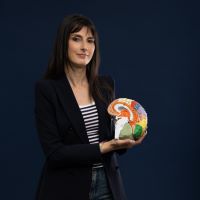
Ana Lund, MBACP PhD(S) Related seminars and products
Ana Lund, MBACP PhD(S)
Ana is an integrative psychotherapist with a foundation in Transactional Analysis and a member of BACP (British Association for Counselling and Psychotherapy). Ana holds a PhD in science and has spent a number of years working in a science lab.
Ana is passionate about bridging the gap between neuroscience and psychotherapy and how to do it well. She is always thinking about the says to leverage the latest neuroscience insight into an effective practice of psychotherapy for helping clients lead happier and more fulfilling lives.
Ana enjoys connecting with fellow therapists through informal discussions, workshops, constructive debates on social media, and her blog. She also spends lots of time trying to learn and understand the relevant neuroscience and connect the two worlds together.
Ana is currently co-writing two books on neuroscience and psychotherapy. One book is a brain guide for therapists and the second book is on neuroscience of attachment (to come out in 2026 and 2027, respectively). Ana is also an avid meditator and uses mindful meditation as a primary source for self-care.
Speaker Disclosures:
Financial: Ana Lund is a blogger with Neuroscience & Psychotherapy blog. She receives a speaking honorarium from PESI, Inc. She has no relevant financial relationships with ineligible organizations.
Non-financial: Ana Lund has no relevant non-financial relationships.
Objectives
- Understand the revised tenets of attachment theory supported by modern attachment research and apply them appropriately in working with attachment clinically.
- Become fluent in adult attachment classification.
- Understand the neuroanatomical model of human attachment (NAMA) and neural signatures of each attachment style.
- Use Relational Neuroscience of Attachment-Informed Therapy (RNAT) framework for case conceptualisation.
- Effectively work with attachment in psychotherapy in a neuroscience informed way.
- Acquire the RNAT (Relational Neuroscience of Attachment-Informed Therapy) toolbox for working with each attachment style.
Outline
Understand the revised tenets of attachment theory and how these can inform the work with clients
- The classic tenets of attachment theory
- The revised tenets of attachment theory in line with modern attachment research
- Clinical implications:
- Can we change attachment throughout the lifespan?
- Are attachment patterns acquired through the environment and upbringing or are they genetic (nature vs. nurture)?
- Is there a transgenerational transmission of attachment patterns?
- How insecure attachment impacts life?
Become familiar with the neuroanatomical model of human attachment (NAMA)
- What is relational neuroscience and how its insights can be translated into clinical work?
- What is the neuroanatomical model of human attachment (NAMA)?
- How NAMA be used to direct clinical work
- Neurobiological signature of each attachment style
Neurobiology and epigenetics of attachment
- Become familiar with elements of neurobiology and epigenetics of attachment and its implications for clinical practice
RNAT (Relational Neuroscience of Attachment-Informed Therapy) framework
- Become familiar with case conceptualisation
- How to assess attachment within the RNAT framework?
- RNAT toolbox for working with each attachment style
Learn how to recognise the neuroscience-myths and stay away from them in your work
- Become more savvy on how to recognise neuroscience myths and become more proficient in using bona fide neuroscience in psychotherapy
Resources and references
- Access to a broad literature and resources for working with attachment styles
Risks and Limitations
- This is a new and therefore to some extent experimental approach
- It applies to non-pathological attachment patterns
Target Audience
- Psychologists
- Counsellors
- Social Workers
- Family Therapists
- Psychotherapists
- Other Mental Health Professionals
Reviews
| 5 |
|
| 4 |
|
| 3 |
|
| 2 |
|
| 1 |
|
Overall: 4.8
Total Reviews: 9
Satisfaction Guarantee
Your satisfaction is our goal and our guarantee. Concerns should be addressed to info@pesi.co.uk or call 01235847393.
Please wait ...