


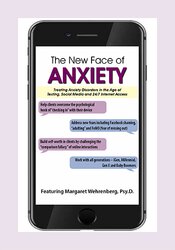
The New Face of Anxiety: Treating Anxiety Disorders in the Age of Texting, Social Media and 24/7 Internet Access
- Average Rating:
- 18
- Speaker:
- Margaret Wehrenberg, PsyD
- Duration:
- 6 Hours 20 Minutes
- Format:
- Audio and Video
- Copyright:
-
12 May, 2021
- Product Code:
- POS054255
- Media Type:
- Digital Seminar
- Access:
- Never expires.

Description
Texting rather than talking. Gathering “likes” and followers. Making friends via a gaming console. Unrelenting 24/7 news cycles. Ready or not, the rise of social media, and 24/7 Internet access has changed the way we relate to one another (and ourselves), leaving in its wake a whole new set of challenges for those who use it.
As therapists, you see people of all ages with these issues:
The girl who can’t put her phone away during session. The boy who isn’t sleeping after reading messages on social media. “Friends” of all ages who shame each other for life choices and argue by text. The socially anxious young adult who struggles to meet people in person because all of his “friends” are online. The parent who has to contend with “Facebook shaming” for every parenting decision. The older adult who feels out of touch and disconnected. The impact is rampant and pervasive – as a result, treatment of anxiety doesn’t look the same anymore.
Watch this unique and engaging seminar to learn innovative ways to treat this new facet of anxiety with today’s client. You’ll discover:
- Key questions to ask at assessment to uncover problematic use of technology
- How excessive screen time affects mood, anxiety and self-worth in clients of all ages
- Tools to help clients regulate their emotions and make wise decisions (on and offline)
- Innovative techniques for promoting healthy use of technology with clients
- Deliberate strategies for managing time, device use and “information overload”
Purchase today!
CPD
Speaker

Margaret Wehrenberg, PsyD Related seminars and products
Margaret Wehrenberg, PsyD, is a licensed clinical psychologist whose five decades of work in the mental health field have had a far-reaching impact on the understanding and treatment of anxiety. Her pioneering approach has influenced psychotherapists, business leaders, educators, elected officials, and legal professionals around the world. Dr. Wehrenberg was among the first to translate the emerging science of neurobiology into practical applications for psychotherapy, demonstrating how clinicians can “use the brain to change the brain” in the treatment of anxiety and depression.
Her twelve books have been translated into eight languages. The 10 Best-Ever Anxiety Management Techniques remains an international bestseller. Her newest book, Letting Go of the Work You Love (co-authored with Lynn Grodzki), is the first comprehensive retirement roadmap for healing professionals.
Dr. Wehrenberg’s expertise has been featured in numerous media outlets. She has a deep personal commitment to giving back to the community, providing pro bono consultation to community organizations, school personnel, and attorneys focused on reducing risks related to anxiety, depression, and suicide.
Speaker Disclosures:
Financial: Dr. Margaret Wehrenberg maintains a private practice. She receives royalties as a published author. She is an international presenter and receives compensation. Dr. Wehrenberg receives a speaking honorarium, book royalties, and recording royalties from Psychotherapy Networker and PESI, Inc. She has no relevant financial relationships with ineligible organizations.
Non-financial: Dr. Margaret Wehrenberg is a member of the Anxiety Disorder Association of America.

Objectives
- Evaluate the impact persistent “screen time” exposure can have on the neurobiological and psychological health of clients.
- Employ strategies to effectively reduce excessive use of technology that leads to avoidance and increased anxiety.
- Propose healthy technology guidelines that increase clients’ usage capacity and decrease risk of anxiety and other mental health symptoms.
- Develop clinical practices that decrease rumination and build resilience to the stress of the digital world.
- Determine five strategies to help clients overcome irrational fears of social interaction in order to improve clinical outcomes.
- Implement cognitive-behavioural strategies for challenging distorted beliefs and the “comparison fallacy” as related to online interactions.
Outline
Neurobiology: The Impact of 24/7 Internet and “Information Overload”
- Is it an addiction? The role of dopamine
- Variable interval rewards: The most powerful reinforcement
- Perpetual state of “fight or flight”
- Impact of technology on the prefrontal cortex
- ”Multi-tasking”: Changing the landscape of learning
- The impact of screen time on rumination
- Impulse control at all ages: Instant v. delayed gratification
Why the Increase in Anxiety? Understand the Problem to Help Clients Find Solutions
- The psychological hook of “checking in”
- Broad skills deficits for coping with normal situations
- Collective anxiety due to 24/7 news cycles
- Generational differences
- Illusions of perfection online
- New fears created/exacerbated by digital media:
- Negative evaluation/rejection
- Having behaviour recorded or posted publicly
- Fear of missing out (FOMO)
- Confrontation
- Taking on responsibilities (“Adulting”)
- Nomophobia
- Use of technology to avoid emotional experiences
- The meaning of “friend” has changed
- Cyberbullying at all ages: The power of anonymity
Strategies that Promote Healthy Use of Technology
- Key questions that uncover anxiety related to digital media use
- Techniques for providing meaningful psychoeducation
- Use “demand delays” to diminish impact of rapid screen shifting
- Tools for setting device boundaries to create more balance
- ”Be still” techniques to tolerate time away from devices
Therapy Tools to Improve Emotional Regulation, Reduce Anxiety and Build Self-Worth
Exposure Therapy/Coaching
- Avoid avoidance!
- How to provide meaningful psychoeducation
- The 3 C’s: Calm, Competent, and Confident
- Accurate anticipation: The power of imagination exposure
- Techniques for teaching social skills
- 5 ways to overcome fears of social situations
- Utilize FOMO (fear of missing out) as a tool for goal development
- Address “adulting” fears
Cognitive-Behavioural Therapy
- Challenge the “comparison fallacy” of online interactions
- Identify and challenge distorted beliefs about the self
- Create new self-talk by changing the script
- Combat perfectionism and procrastination
- Ellis’ ABCD approach to identify inhibiting beliefs
Stress Management
- Eliminate the stressor – incorporate media “time outs”
- Manage time and environment
- Shifting attitudes
Relaxation and Mindfulness
- Skills for calming the persistently vigilant nervous system
- Interrupt rumination and build resilience
- Apps that promote calming breathing techniques
Clinical Considerations
- Identify and address personal bias/countertransference issues
- Between-session recommendations that reinforce skills
- Limitations of the research and potential risks
Target Audience
- Social Workers
- Psychiatrists
- Psychologists
- Counselors
- Marriage and Family Therapists
- Case Managers
- Addiction Counselors
- Therapists
- Nurses
- Other Mental Health Professionals
Reviews
| 5 |
|
| 4 |
|
| 3 |
|
| 2 |
|
| 1 |
|
Overall: 4.9
Total Reviews: 18
Satisfaction Guarantee
Your satisfaction is our goal and our guarantee. Concerns should be addressed to info@pesi.co.uk or call 01235847393.
Please wait ...