


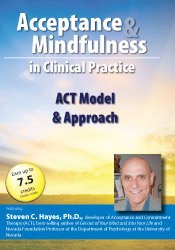
The ACT Model & Approach
- Average Rating:
- 1
- Speaker:
- Steven C. Hayes, Ph.D.
- Duration:
- 5 Hours 46 Minutes
- Format:
- Audio and Video
- Copyright:
-
02 Dec, 2010
- Product Code:
- POS041105
- Media Type:
- Digital Seminar
- Access:
- Never expires.

Description
Acceptance and mindfulness is having a profound impact on clinical practice. Both empirically-supported and focused on deep clinical issues, acceptance and mindfulness approaches have been shown to help clients cope with a wide variety of clinical problems including:
- Depression
- Anxiety
- Stress
- Substance Abuse
- Psychotic Symptoms
- Trauma
Many have described ACT as the next DBT! Don’t miss this opportunity to learn how Acceptance and Commitment Therapy (ACT) can empower your clinical work. ACT takes the view that trying to change difficult thoughts and feelings as a means of coping can be relatively ineffective. However, new, powerful acceptance and mindfulness-based alternatives are readily available.
When combined with values—and committed action—ACT skills can quickly mobilize even some of our most stuck clients. The intention of the workshop is to provide you with the foundation of ACT and a beginning set of skills and experiences that will direct further development.
This seminar recording will provide a comprehensive understanding of the ACT model. Learn how the six core processes of ACT explain psychopathology and impact the therapeutic relationship and client outcomes. In addition, you will learn to formulate cases from an ACT viewpoint and apply those to your existing CBT skills.
CPD
Speaker
Steven C. Hayes, Ph.D. Related seminars and products
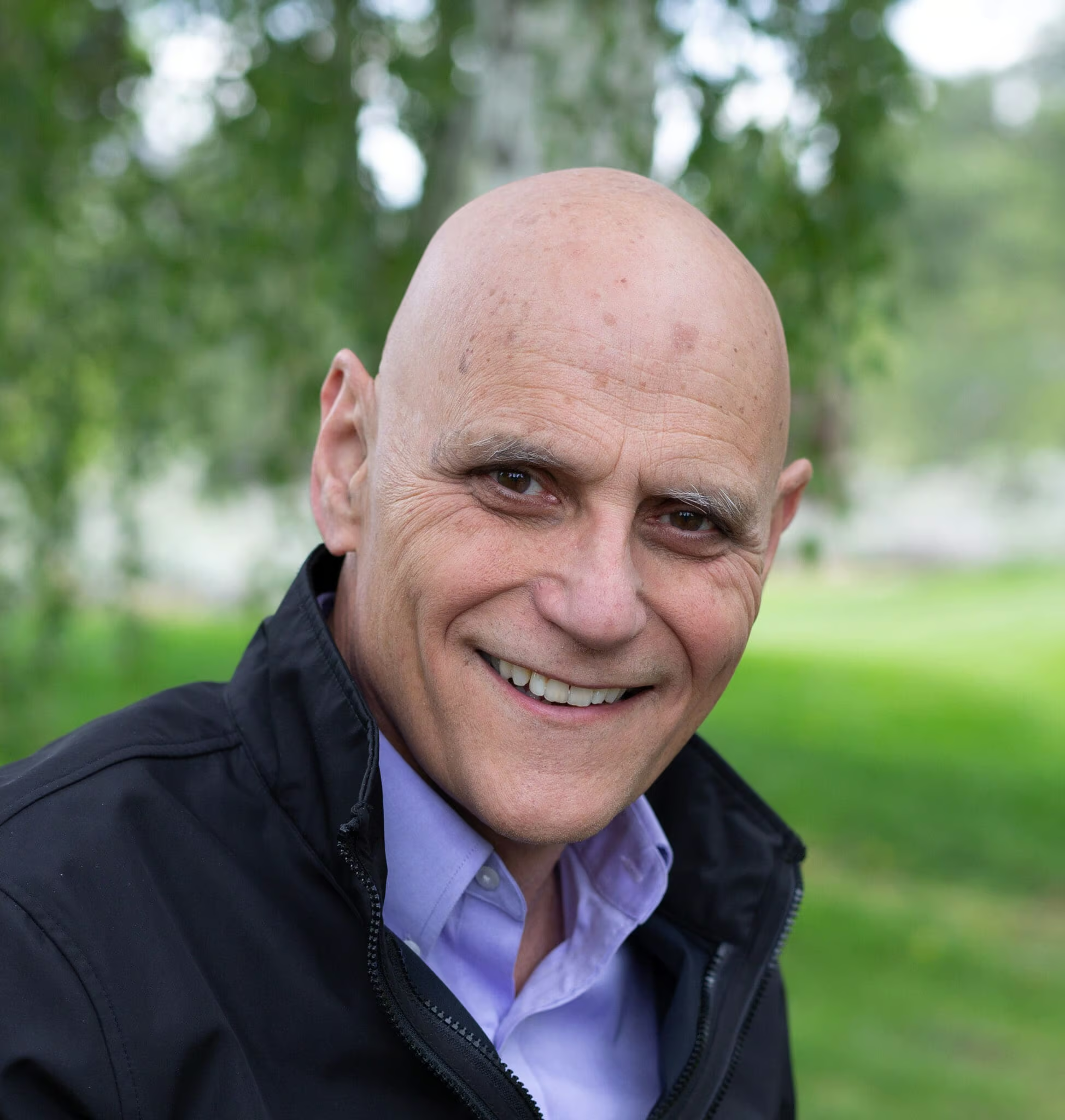
Steven C. Hayes, PhD, Among the most cited and innovative psychologists in the world, Steven Hayes is the originator of Acceptance and Commitment Therapy (ACT) and Relational Frame Theory (RFT), and co-developer of Process-Based Therapy (PBT). Dr. Hayes is best-selling author of Get Out of Your Mind and Into Your Life and Nevada Foundation Professor at the Department of Psychology at the University of Nevada. An author of 44 books and nearly 600 scientific articles, he has shown in his research how language and thought leads to human suffering and has developed ACT as a way of correcting these processes. Hayes has been president of several scientific societies and has received several national awards, such as the Lifetime Achievement Award from the Association for Behavioral and Cognitive Therapies.
His popular book was featured in Time Magazine among several other major media outlets, and for a time was the number one best-selling self-help book in the United States. Steven Hayes speaks on internationally on acceptance and mindfulness and is one of the world’s most influential and cited clinical psychologists.
Speaker Disclosures:
Financial: Steven Hayes is the Foundation Professor Emeritus of the University of Nevada. He is the President of Institute for Better health and PsychFlex, Inc. Steven Hayes receives a speaking honorarium and recording royalties from PESI, Inc. He has no relevant financial relationships with ineligible organizations.
Non-financial: Steven Hayes is a fellow of the American Association for the Advancement of Science, the American Psychological Society, the Association for Behavioral and Cognitive Therapies, the Association for Contextual Behavioral Science, and the Association for Behavioral Analysis International. He serves on the scientific advisory committee for MIND foundation. He is a series editor for several publications, for a complete list contact PESI, Inc.
Objectives
- Explain why experiential avoidance and cognitive fusion underlie most forms of psychopathology
- Define ACT as a psychological flexibility model of health
- Formulate clinical problems in terms of acceptance, defusion, self, now, values and committed action
- Identify these processes moment to moment in clients
Outline
Acceptance and Mindfulness
- The role of language in the ubiquity of human suffering
- Self-struggle and experiential avoidance
- Objectification and dehumanization
The ACT Model
- Self
- Now
- Acceptance
- Defusion
- Values
- Action
- Flexibility
Mindfulness from an ACT Point of View
Evidence of Impact
Learning to See ACT Processes in Flight
- Signs of each ACT process
- Assessing the Strength of ACT Processes
- Using the hexaflex model in case conceptualization
Video Example
- Case conceptualization
- Breaking down ACT moves moment to moment
Target Audience
Addiction Counselors, Social Workers, Psychologists, Counselors, Nurses, Marriage & Family Therapists, Other Mental Health CliniciansReviews
| 5 |
|
| 4 |
|
| 3 |
|
| 2 |
|
| 1 |
|
Overall: 4
Total Reviews: 1
Satisfaction Guarantee
Your satisfaction is our goal and our guarantee. Concerns should be addressed to info@pesi.co.uk or call 01235847393.
Please wait ...