


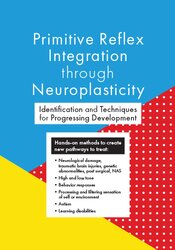
Primitive Reflex Integration through Neuroplasticity
- Average Rating:
- 19
- Speaker:
- Karen Pryor, PhD, PT, DPT, CH, CFPS
- Duration:
- 6 Hours 04 Minutes
- Format:
- Audio and Video
- Copyright:
-
17 May, 2019
- Product Code:
- POS063655
- Media Type:
- Digital Seminar
- Access:
- Never expires.

Description
In this interactive recording, improve treatment for your clients by discovering the link between primitive reflexes and development. Learn to evaluate the influence of primitive reflexes with central nervous system developmental stages, as it relates to function.
Practice simple techniques to immediately add to your treatment sessions, leading to increased developmental success:
- Behavioral Challenges
- Learning Disabilities
- Neurological Deficits
- Sensory Processing Problems
- Autism
- ADHD
CPD
Speaker

Karen Pryor, PhD, PT, DPT, CH, CFPS Related seminars and products
Karen Pryor, PhD, PT, DPT, CH, CFPS, has a doctorate in physical therapy and has practiced for 40 years in the field. Dr. Pryor is the owner of Health Sphere Wellness Center, an integrative therapy clinic in Nashville, Tennessee. Involved with early intervention in the birth-three population for over 30 years, she has developed neuroplasticity techniques that are used in a wide variety of settings, including homes, childcare centers, and school systems, to advanced pediatric therapy programs.
Dr. Pryor serves on several boards, including the Leadership Interagency Council for Early Intervention (2014-2019), a position to which she was appointed by Tennessee Governor Bill Haslam. In 2010, she received the President's Volunteer Service Award for her contributions to the advanced treatment of children from President Barack Obama. In addition to her work with children, Dr. Pryor has served as an adjunct professor at the Tennessee State University Occupational Therapy Assistant program. She is a clinical instructor for several universities and colleges. With her years of experience and passion for complete wellness, Dr. Pryor advances a more expansive view of how to integrate therapy throughout the lifespan by using neuroplasticity techniques.
Speaker Disclosures:
Financial: Karen Pryor is the owner of Health Sphere Wellness Center, LLC and is a field examiner for PDMS-3. She has employment relationships with Tennessee State University, the University of Tennessee at Chattanooga Physical Therapy School, the Daymar Physical Therapy Assistant School and the Volunteer State Community College. She is a paid consultant for Evergreen Certifications. Karen Pryor receives a speaking honorarium and recording royalties from PESI, Inc. She has no relevant financial relationships with ineligible organizations.
Non-financial: Karen Pryor is a reviewer with Tennessee Physical Therapy Association and American Physical Therapy Association. She is an Ambassador for National Down Syndrome Society. She serves on the editorial board for APTA Journal.
Objectives
- Identify primitive reflexes and how they contribute to development.
- Articulate testing and influence of the retention of primitive reflexes.
- Demonstrate the integration exercise, including modifications, for each reflex.
- Identify the behavioral and physical symptoms associated with each reflex.
- Examine why the reflexes may still be present.
- Discuss what reflex integration can accomplish.
Outline
PRIMITIVE REFLEX OVERVIEW
- Brain development
- Brain stem
- Mid brain
- Cerebellum Cortex
- Occipital Lobe
- Temporal Lobe
- Parietal Lobe
- Frontal Lobe
- Evaluation and demonstration of Primitive reflexes
- How retained reflexes act on developmental milestones
- Reasons for primitive reflex retention or re-emergence
- How primitive reflexes interfere with higher level skills – Reading, writing, sensory processing
PRIMITIVE REFLEXES COVERED IN DETAIL
- Palmar Grasp
- Plantar Grasp
- Symmetrical Tonic Neck
- Asymmetrical Tonic Neck
- Tonic Labyrinthine Reflex
- Moro Reflex
- Extension synergy
- Flexion synergy
Hands-On Activities
- Disarming the strength of primitive reflexes
- Palmar grasp
- Plantar grasp
- Asymmetrical Tonic Neck
- Symmetrical Tonic Neck
- Moro Reflex
Case Studies
- 17 year-old anoxic male integration of brain stem functions, cranial nerves, midbrain to regain cortical functions without over riding primitive reflex patterns
- 8 month-old with stroke at birth, cortical vision impairment, involvement of bilateral hemispheres and symmetrical tonic neck reflex. Integration of reflexes, gained vision abilities.
- 1 year-old hemisphere stroke. Asymmetrical Tonic Reflex integrated and able to walk and run.
- Genetic non-myelination and smooth brain 9 month-old female with tone abnormalities, Tonic Labyrinthine Reflex. Integration and neuroplasticity therapy techniques resulted in ability to walk with rolling walker, count to 20 English, 10 in Spanish, name the months of the year and days of the week.
Target Audience
- Physical Therapist
- Occupational Therapist
- Speech Language Pathologist
- Physical Therapy Assistant
- Occupational Therapy Assistant
- Educator
- Early Interventionist
Reviews
| 5 |
|
| 4 |
|
| 3 |
|
| 2 |
|
| 1 |
|
Overall: 4.8
Total Reviews: 19
Satisfaction Guarantee
Your satisfaction is our goal and our guarantee. Concerns should be addressed to info@pesi.co.uk or call 01235847393.
Please wait ...