


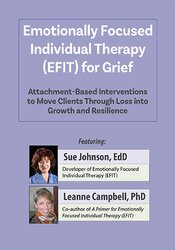
Emotionally Focused Individual Therapy (EFIT) for Grief: Attachment-Based Interventions to Move Clients Through Loss into Growth and Resilience
- Average Rating:
- Not yet rated
- Speakers:
- Susan Johnson, EdD | Leanne Campbell, PhD
- Duration:
- 6 Hours 25 Minutes
- Format:
- Audio and Video
- Copyright:
-
19 May, 2022
- Product Code:
- POS058776
- Media Type:
- Digital Seminar
- Access:
- Never expires.

Description
“Who am I now? I can’t imagine my life without them.”
Grief is unpredictable. In response to this shock to the attachment system, your clients may become dysregulated or shut down in the days, weeks, months, and years ahead.
You could offer them a supportive space and some suggestions for coping.
Or you could help them shift into the type of emotional balance that allows them to move through grief – using the power of attachment theory and science.
Emotionally Focused Individual Therapy (EFIT) offers a dependable map to tune into your clients’ emotions as they grapple with the impact of loss. EFIT takes you to the heart of the matter with clear interventions that will reliably shape transformational emotional moments for your clients in every session.
During this 1-day workshop, Dr. Sue Johnson and Dr. Leanne Campbell will give you a blueprint to use with your clients struggling with loss – including anticipatory loss and traumatic loss. You’ll be ready to:
- Conduct process-oriented assessments that frame grief from an attachment perspective
- Utilize a proven set of macro and micro interventions that respond to the core longings, needs, and vulnerabilities your grieving clients are experiencing
- Resolve symptoms, transform trauma, and move clients into the type of full, flexible aliveness that promotes resilience and growth
Purchase now - harness the power of emotions and integrate attachment science into your practice with clients struggling in the aftermath of loss.
CPD
Speaker
Susan Johnson, EdD Related seminars and products
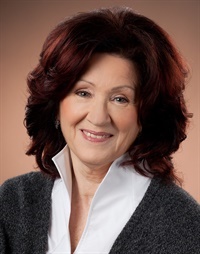
The late Susan Johnson, EdD, was a best-selling author, clinical psychologist, distinguished research professor, dynamic speaker, and recognized innovator who changed the field of couple therapy. Sue was the primary developer of Emotionally Focused Therapy (EFT), which has demonstrated its effectiveness in over 30 years of peer-reviewed clinical research. She was the director of the International Center for Excellence in Emotionally Focused Therapy and a distinguished research professor at Alliant University in San Diego, California, as well as professor of clinical psychology at the University of Ottawa, Canada. She trained behavioral health providers in EFT worldwide and is still recognized as one of the most prominent researchers and presenters in the couple therapy field.
Speaker Disclosures:
Financial: Dr. Sue Johnson had employment relationships with University of British Columbia, Campbell & Fairweather Psychology Group, Alliant International, University Ottawa, Couple and Family Institute, and the International Center for Excellence in Emotionally Focused Therapy. She received royalties as a published author. Dr. Johnson received a speaking honorarium, recording royalties, and book royalties from PESI, Inc. She had no relevant financial relationships with ineligible organizations.
Non-financial: Dr. Sue Johnson served on the editorial board for the American Journal of Family Therapy (AJFT) and the journal Couple and Family Psychology: Research & Practice.

Leanne Campbell, PhD Related seminars and products
Leanne Campbell, PhD, is co-developer of Emotionally Focused Individual Therapy (EFIT) and co-author with Dr. Susan Johnson of the first basic EFIT text, A Primer for Emotionally Focused Individual Therapy (EFIT). She also co-authored Emotionally Focused Therapy for Trauma and contributed to Becoming an Emotionally Focused Therapist: The Workbook.
Dr. Campbell is a registered psychologist in the province of British Columbia, vice president of the International Center for Excellence in Emotionally Focused Therapy (ICEEFT), and an international speaker, writer, researcher, trainer and co-author of various EFT-related educational programs and materials. In addition to providing psychological services to hundreds of individuals, couples, and families over nearly three decades, Dr. Campbell provides trainings in Emotional Focused Therapy (EFT) to professionals around the globe with a primary focus in the areas of loss and trauma. Dr. Campbell’s dedication to advancing EFT principles and her commitment to helping others grow through emotionally focused interventions have made her a foremost authority in the field.
Speaker Disclosures:
Financial: T. Leanne Campbell maintains a private practice and receives royalties as a published author. She receives a speaking honorarium, recording, and book royalties from Psychotherapy Networker and PESI, Inc. She has no relevant financial relationships with ineligible organizations.
Non-financial: T. Leanne Campbell is a board member International Centre for Excellence in Emotionally Focused Therapy. She is a member of the Canadian Psychological Association, the College of Psychologists of British Columbia, and the International Centre for Excellence in Emotionally Focused Therapy.
Objectives
- Apply attachment theory principles to case conceptualization of clients experiencing grief.
- Evaluate the three stages of the EFIT model to inform clinical treatment interventions for grief-related symptoms.
- Describe four pre- and post-loss attachment-related factors and their clinical implications.
- Apply the CARE model to contextualize clients’ loss experiences within their attachment history.
- Create imaginal encounters for grieving clients to evoke adaptive emotion, facilitate self-compassion, and provide attachment resources.
- Employ at least three interventions focused on reflecting and understanding clients’ grief-related emotions.
Outline
Attachment Science and Grief:The model known for love also deals with loss
- The attachment view of love and loss
- Grief trajectories and the key role of resilience
- Implications of specific types of losses (e.g., anticipatory, traumatic, non-death losses)
- Pre- and post-loss factors
Making assessments process-oriented and therapeutic
- How to build a safe-haven alliance
- The view of self in relationship from a developmental attachment perspective
- CARE model: Tuning in and staying attuned to four main channels
- Guidelines for gauging the process and charting the course of therapy
EFIT stages and steps
- The organic model of growth and change - working with vulnerability and spotting negative cycles of coping
- EFT “Tango” across stages
- Mirroring/reflecting present process
- Affect assembly and deepening
- Choreographing engaged encounters with self and others
- Processing these choreographed encounters to create emotional balance
- Integrating and validating new experience
- How and when to use micro interventions of evocative questioning, reflection, and interpretation
- Case studies
- Limitations of the research and potential risks
Target Audience
- Counselors
- Psychologists
- Psychotherapists
- Social Workers
- Marriage & Family Therapists
- Addiction Counselors
- Case Managers
- Psychiatrists
- Mental Health Professionals
Reviews
Satisfaction Guarantee
Your satisfaction is our goal and our guarantee. Concerns should be addressed to info@pesi.co.uk or call 01235847393.
Please wait ...