


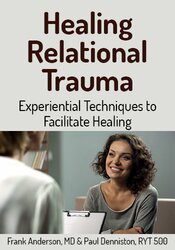
Healing Relational Trauma
Experiential Techniques to Facilitate Healing
- Average Rating:
- 208
- Speakers:
- Frank Anderson, MD | Paul Denniston, RYT 500
- Duration:
- 2 Hours
- Format:
- Audio and Video
- Copyright:
-
23 Mar, 2024
- Product Code:
- NOS096374
- Media Type:
- Digital Seminar
- Access:
- Never expires.

Description
Clients struggling with relational trauma, complex PTSD, or bereavement often just want the pain to stop, and expect their therapist to have a clear map to their healing. Although everyone’s pain and trauma are unique, there are ways you can help your clients accept and normalize the trauma experience and move toward healing the mind and body. In this highly experiential workshop, you’ll discover:
- Practices for embodying and moving through uncomfortable feelings and distressing emotions that can be done from a chair and easily translated into your practice
- Experiential ways of working with clients who shut down or dissociate in session
- Skills for accessing client’s inner emotional and physical resources for creating safety
- Practices for tapping into the ability to witness, disconfirm, and release parts of the past that are no longer helpful
CPD
Speaker

Frank Anderson, MD Related seminars and products
Frank Anderson, MD, completed his residency and was a clinical instructor in psychiatry at Harvard Medical School. He is both a psychiatrist and psychotherapist. He specializes in the treatment of trauma and dissociation and is passionate about teaching brain-based psychotherapy and integrating current neuroscience knowledge with the IFS model of therapy.
Dr. Anderson has lectured extensively on the Neurobiology of PTSD and Dissociation and wrote the chapter “Who’s Taking What” Connecting Neuroscience, Psychopharmacology and Internal Family Systems for Trauma in Internal Family Systems Therapy – New Dimensions. He co-authored a chapter on What IFS Brings to Trauma Treatment in Innovations and Elaborations in Internal Family Systems Therapy, and recently co-authored Internal Family Systems Skills Training Manual.
His most recent book, entitled Transcending Trauma: Healing Complex PTSD with Internal Family Systems was released on May 19, 2021.
His memoir, To Be Loved, was released on May 7, 2024.
Speaker Disclosures:
Financial: Dr. Frank Anderson maintains a private practice, is the co-founder of the Trauma Institute, and is the co-founding producer of Trauma Informed Media. He receives royalties as a published author. He receives a speaking honorarium, recording, and book royalties from PESI, Inc. He has no relevant financial relationships with ineligible organizations.
Non-financial: Dr. Frank Anderson is a member of the New England Society Studying Trauma and Dissociation and the International Society for the Study of Trauma and Dissociation.
Paul Denniston, RYT 500 Related seminars and products
Paul Denniston, RYT 500, is the founder of Grief Yoga, which he teaches to counselors, psychologists, and healthcare professionals. He certifies other yoga teachers in the Grief Yoga Teacher Training. He’s also the author of the bestselling book Healing Through Yoga: Transform Loss into Empowerment.
Speaker Disclosures:
Financial: Paul Denniston is the founder of Grief Yoga and has employment relationships with Core Power Yoga, The Yogi Tree, Esalen, 1440 Multiversity, and Kripalu Yoga Center. He receives royalties as a published author. He receives a speaking honorarium from Psychotherapy Networker and PESI, Inc. He has no relevant financial relationships with ineligible organizations.
Non-financial: Paul Denniston has no relevant non-financial relationships.
Additional Info
Access for Self-Study (Non-Interactive)Access never expires for this product.
Questions?
Visit our FAQ page at www.pesi.com/faq or contact us at www.pesi.com/info
Objectives
- Describe the concept of Titration as it relates to using movement, breath and sound to create a safe environment for clients.
- Summarize the core principles of the IFS model of therapy.
- Demonstrate an understanding of the concept of Self Energy within the context of the IFS model.
- Evaluate the significance and purpose of gaining permission from protective parts within the therapeutic process.
Outline
- Understanding Titration when using movement, breath and sound to help clients feel safe while also ways to release challenging emotions
- Ways to self regulate when feeling activated and overwhelmed.
- Ways to deepen the breath and help clients move the body
- Ways to use sound to self- regulate
- Energizing techniques when clients are feeling dissociated
- Empowering techniques to safely discharge pain and trauma
- Embodied techniques to witness trauma and grief
- Flowing Meditations that facilitate compassion
- Essentials of the IFS model of therapy.
- What is Self- Energy
- Strategies for gaining permission from protective parts to access hidden vulnerability
- Core components of healing
- Risks and Limitations of the Research
Target Audience
- Psychologists
- Physicians
- Nurses
- Counsellors
- Marriage and Family Therapists
- Addiction Counsellors
- Social Workers
Reviews
| 5 |
|
| 4 |
|
| 3 |
|
| 2 |
|
| 1 |
|
Overall: 4.6
Total Reviews: 208
Satisfaction Guarantee
Your satisfaction is our goal and our guarantee. Concerns should be addressed to info@pesi.co.uk or call 01235847393.
Please wait ...