


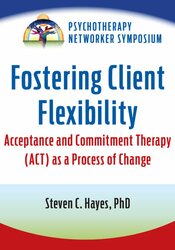
Fostering Client Flexibility: Acceptance and Commitment Therapy (ACT) as a Process of Change
- Average Rating:
- 147
- Speaker:
- Steven C. Hayes, PhD
- Duration:
- 4 Hours 02 Minutes
- Copyright:
-
12 Mar, 2022
- Product Code:
- NOS096207
- Media Type:
- Digital Seminar
- Access:
- Never expires.

Description
Evidence-based therapy is changing. Where once treatment favoured protocols for certain syndromes, now, in a new era of process-based therapy, the focus has turned to the needs, strengths, and cultural background of clients—and the processes that result in an uplifting relationship between them and their practitioner. When therapists can identify these processes, or underlying mechanisms, they’re better equipped to help clients successfully reach their goals. In this paradigm-shifting recording, you’ll discover:
- The key features of process-based therapy
- How to detect and target processes of change in your client
- What a case conceptualization based on processes looks like
- How to implement ACT’s psychological flexibility as a process of change
CPD
Speaker
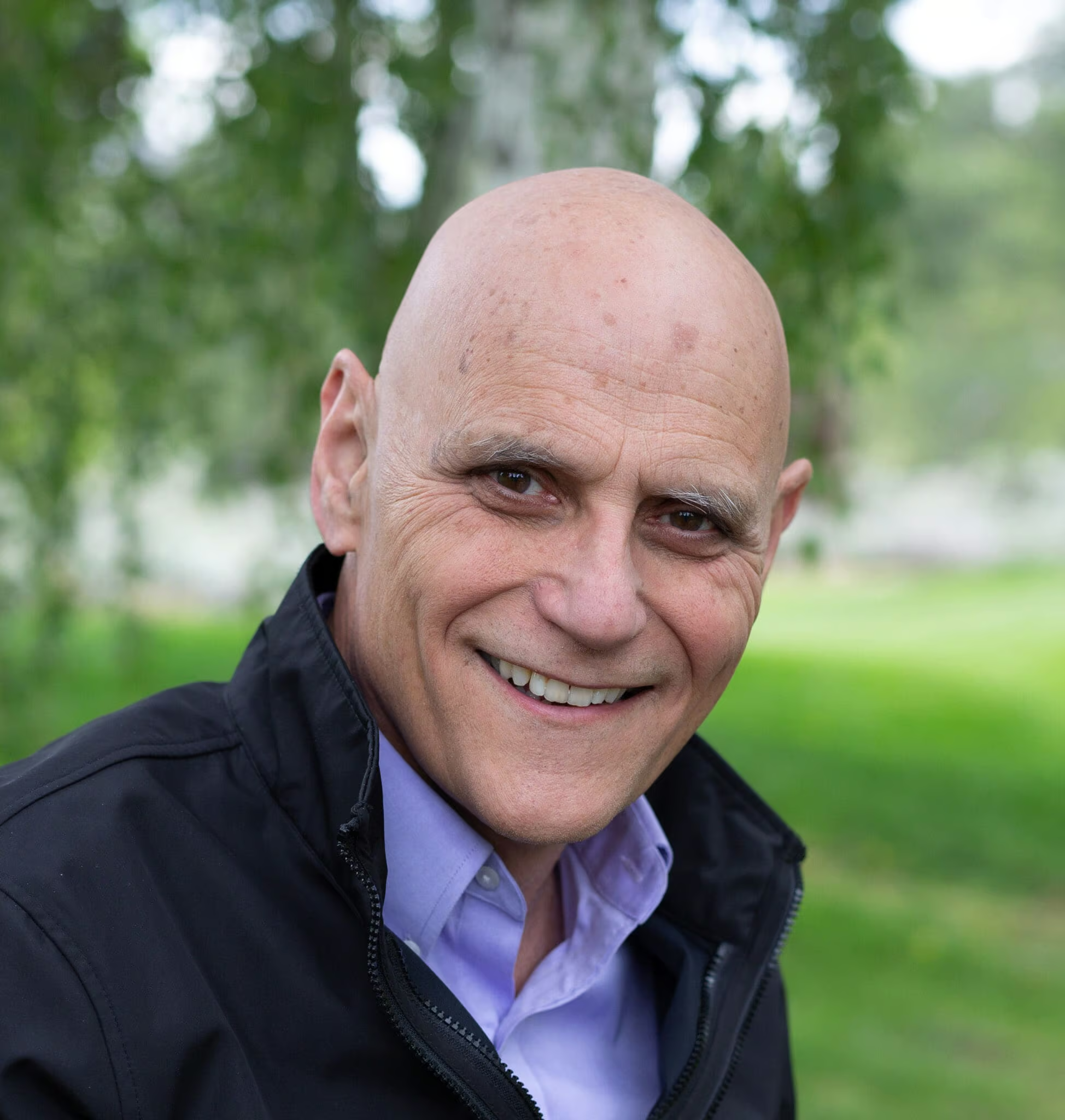
Steven C. Hayes, PhD Related seminars and products
Dr. Steven C. Hayes is an Emeritus Professor of Psychology at the University of Nevada, Reno, and president of the Institute for Better Health, a 45-year-old charitable organization dedicated to better mental and behavioral health.
His work has been focused on developing a new behavioral science approach called Contextual Behavioral Science. He originated its underlying philosophical of science (Functional Contextualism), its basic science of human higher cognition (Relational Frame Theory or “RFT”), its application to individual psychological change (Acceptance and Commitment Therapy or Training, “ACT” in either case), and co-developed its application to the development of more cooperative groups (Prosocial). He has helped develop a model of human suffering and human prosperity (the Psychological Flexibility Model), a new method of analyzing processes of change (idionomic analysis), a new vision of what evidence-based intervention should be (Process-Based Therapy), and he has extended multidimensional and multilevel evolutionary thinking to human problems of all kinds.
His work has been celebrated with several awards, such as the Lifetime Achievement Award from the Association for Behavioral and Cognitive Therapies and the Impact of Science on Application Award from the Society for the Advancement of Behavior Analysis.
With 47 books and nearly 700 scientific articles published, Dr. Hayes is one of the most cited psychologists in the world as he continues to innovate in the field of psychology.
Speaker Disclosures:
Financial: Steven Hayes is the Foundation Professor Emeritus of the University of Nevada. He is the President of Institute for Better health and PsychFlex, Inc. Steven Hayes receives a speaking honorarium and recording royalties from PESI, Inc. He has no relevant financial relationships with ineligible organizations.
Non-financial: Steven Hayes is a fellow of the American Association for the Advancement of Science, the American Psychological Society, the Association for Behavioral and Cognitive Therapies, the Association for Contextual Behavioral Science, and the Association for Behavioral Analysis International. He serves on the scientific advisory committee for MIND foundation. He is a series editor for several publications, for a complete list contact PESI, Inc.
Objectives
- Differentiate between a process-based therapy approach and a system based on protocols and syndromes.
- Catalogue the psychological processes that need to be targeted in ACT work.
- Propose what "values" are in the context of ACT work and explain the characteristics of values and describe why values are critical to a client achieving beneficial long-term outcomes.
- Practice at least 3 strategies for speaking with clients in a way that effectively engages them to work on the psychological flexibility process of values.
- Demonstrate the use of a case conceptualization matrix based on core psychological processes.
Outline
- Key features and distinctions of a process-based approach to therapy
- Detecting and targeting the psychological processes for creating change
- The critical role of values vs goals in therapy
- Case conceptualization in process-based therapies
Target Audience
- Psychologists
- Physicians
- Addiction Counselors
- Counselors
- Social Workers
- Marriage & Family Therapists
- Art Therapists
- Nurses
- Other Behavioral Health Professionals
Reviews
| 5 |
|
| 4 |
|
| 3 |
|
| 2 |
|
| 1 |
|
Overall: 4.7
Total Reviews: 147
Satisfaction Guarantee
Your satisfaction is our goal and our guarantee. Concerns should be addressed to info@pesi.co.uk or call 01235847393.
Please wait ...